Sight-read piano music with less panic.
Sight-reading is a skill you build in small daily doses, not a talent you either have or don't. Practical guides for keeping the pulse, reading notes faster and choosing what to read.
Start here
If you only read three pages, read these.
How to practise sight-reading: a 4-week plan
Ten to fifteen minutes a day, with one clear goal for each week. The plan most readers start with.
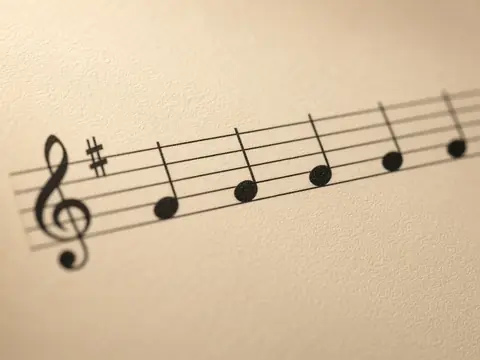
How to read notes faster
Stop counting lines. Learn a few landmark notes and read everything else as steps and skips from them.
The 30-second scan before you play
What to check in the 30 seconds before you play the first note: key, time, rhythm, patterns and danger spots.
Note-reading flash quiz
Name notes on the treble and bass staves against the clock. Missed notes come back sooner; a 60-second sprint mode keeps your best score.
Practice plans & exercises
What to do in ten or fifteen minutes a day, and how to make it stick.
Daily sight-reading exercises
Graded drills that work with any beginner or method book, from single-line reading to hands together.
Sight-reading hands together
Read vertically, keep the pulse, and know exactly what to drop when two staves get too busy.
How long to learn sight-reading
There is no honest fixed number. Here is what speeds it up, the milestones to look for and how to measure progress.
Note & rhythm reading
Treble and bass notes, ledger lines, intervals, rhythm and keys.
How to sight-read rhythms
Counting out loud, subdivision and keeping the pulse when the notes get hard.
Key signatures at a glance
The order of sharps and flats, quick rules for naming the key, and what it means for your hands.
Reading ledger lines
Reading notes above and below the staff without counting every line.
How to read bass clef notes
Lines, spaces, four landmarks and a five-minute drill for the clef most pianists read more slowly.
Treble clef notes
Every line and space, the four landmarks that make it fast, and the ledger notes just above and below.
Reading intervals on sight
Read the first note, then the distance. The line-space rule makes intervals visible without counting.
Exams, music & adult learners
Preparing for a sight-reading test, choosing material, and learning later in life.
Choosing music for sight-reading practice
How easy is easy enough, and where to find a steady supply of fresh, free or cheap music to read.

Sight-reading for adult learners
Less time and more self-consciousness than a child, but better pattern recognition and planning. How to make that work.
Sight-reading in piano exams
Use the preparation time well, keep the pulse, and run in with six weeks of short daily tests.
About this site
Editorial standards →Sight Reading Tips is a new, independent guide to reading music at sight, mainly for piano, launched in October 2026. Pages are written from scratch by our editorial team from standard music theory and common teaching practice. It does not sell courses, PDFs or CDs and is not connected with any business that used this domain before.