Sight-reading hands together
Read vertically, keep the pulse, and know exactly what to drop when two staves get too busy.
Key points
- Read both staves as one stacked picture, beat by beat.
- Priority: pulse, melody, first bass note, the rest.
- Hymn soprano + bass is the ideal trainer.
Reading two staves at once is the moment many pianists stall. The trick is to read vertically, bar by bar, simplify ruthlessly when needed, and never let the pulse stop.
Read vertically
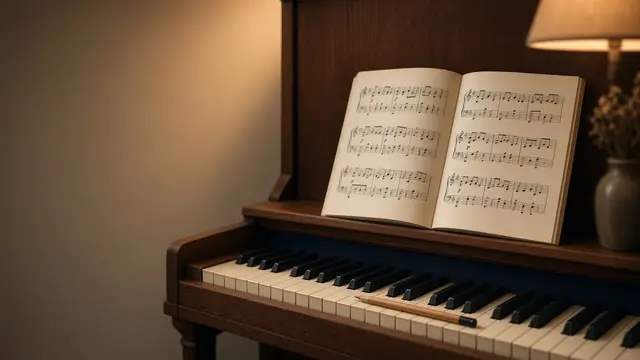
Look at both staves as one picture. On each beat, read from the bass note up to the treble note, the way chords are stacked. Your eyes zig-zag down-up across the grand staff instead of reading the right hand all the way through and then the left.
Know what to drop
When you cannot play everything, keep these, in this order:
- The pulse
- The melody (usually the top line of the right hand)
- The bass note on the first beat of each bar
- Everything else
A melody with one bass note per bar sounds musical. A perfect right hand that stops every bar does not.
Five drills
- Bass-on-the-beat: play the full right hand and only the first left-hand note of each bar. Add more left hand as it gets easier.
- Hands-separate preview: before reading hands together, play each hand once at tempo. Then together, slower.
- Hymn soprano + bass: in a four-part hymn, play only the top and bottom notes. It is the perfect hands-together trainer.
- Duet parts: secondo parts often have simple right hands; primo parts have simple left hands.
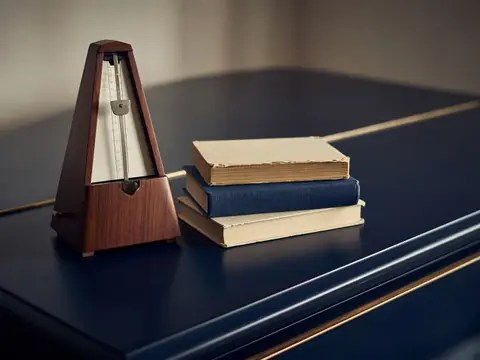
- Slow metronome: set it so slow it feels silly (40–50). Play every note exactly on the click.
Watch for
- Clef changes in the left hand (bass to treble), common in beginner music.
- Rests in one hand that tempt you to rush the other.
- Hand-position changes: spot them in the 30-second scan.