Note & rhythm reading
The building blocks of reading: knowing notes on sight, seeing intervals and chord shapes, and keeping rhythm steady. Each guide has drills you can do in five minutes.
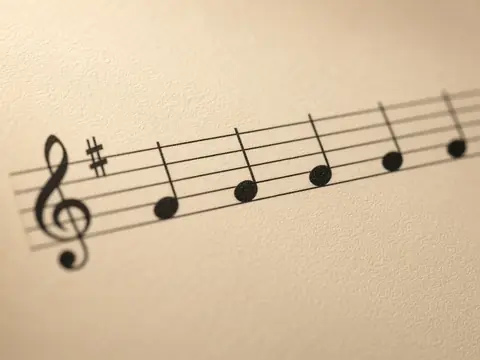
10 guides
How to read notes faster
Stop counting lines. Learn a few landmark notes and read everything else as steps and skips from them.
Rhythm reading for sight-readers
Counting out loud, subdivision and keeping the pulse when the notes get hard.
Key signatures at a glance
The order of sharps and flats, quick rules for naming the key, and what it means for your hands.
Reading ledger lines
Reading notes above and below the staff without counting every line.
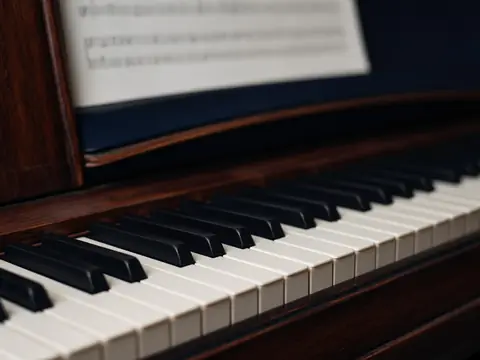
How to read bass clef notes
Lines, spaces, four landmarks and a five-minute drill for the clef most pianists read more slowly.
Treble clef notes
Every line and space, the four landmarks that make it fast, and the ledger notes just above and below.
Reading intervals on sight
Read the first note, then the distance. The line-space rule makes intervals visible without counting.
Reading chords at sight
Triads come in three shapes. Learn to spot them and find the root without counting every note.
Accidentals: the rules
How long a sharp or flat lasts, what naturals and courtesy accidentals mean, and how to stop missing them.
Time signatures for sight-readers
What the numbers mean, simple vs compound time, 6/8 vs 3/4, and how to count each before your first note.